Profile 01
Daytime operation
Consumption concentrated between morning and afternoon, with little load at night.
- Solution
- Solar photovoltaic (PV)
- Operating mode
- Maximum self-consumption

Lowering your electricity bill is possible when it is done with engineering.
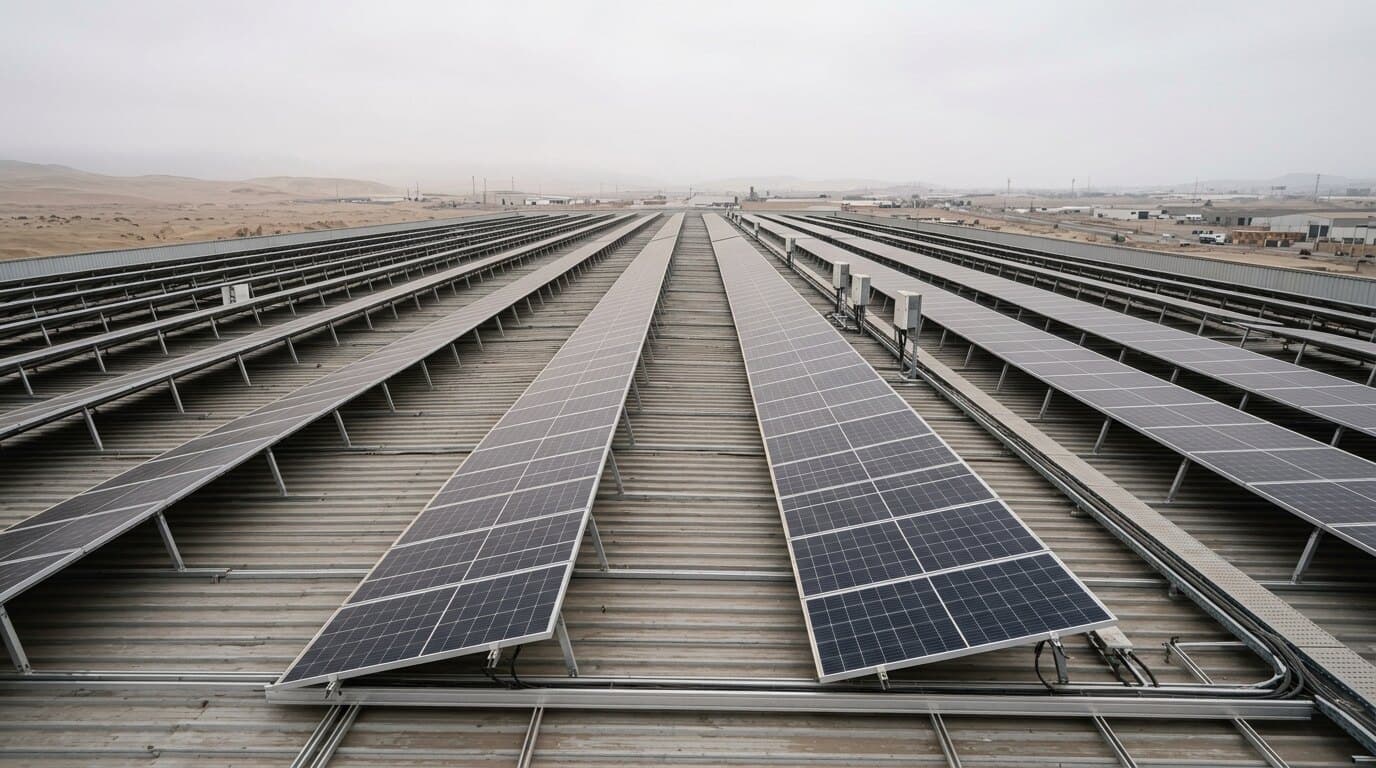
Many companies today set out to save energy, but few achieve a real, lasting impact on their electricity bill. Savings depend not only on installing equipment, but on understanding how energy is used and where excess costs arise.
At Dacast, we help companies reduce their electricity bills by targeting the two components that truly matter: energy and demand.
More than a third of the bill is usually demand, not energy.
36%is peak-hour demand
Profile 01
Consumption concentrated between morning and afternoon, with little load at night.
Profile 02
High demand, with machinery start-ups that drive up maximum demand.
Profile 03
Steady consumption around the clock, with no drop at night.
The initial analysis is free, with no commitment. Twelve months of bills are enough to estimate the order of magnitude of the savings.
Twelve months of bills allow us to break down energy and demand charges and rebuild the consumption profile.
A power analyzer is installed to capture the actual load curve of the operation.
System sizing, recommended option, investment and estimated payback period.
Detailed engineering, installation, certified commissioning and post-installation monitoring.
Applications
Before
After
BESS: Battery Energy Storage System.
On a typical medium-voltage bill, peak-hour demand accounts for 36% of the subtotal, off-peak energy for 47%, peak-hour energy for 12% and fixed charges for 5%. That is why Soluciones Dacast targets the two components that truly matter: energy and demand.
For daytime operations, solar photovoltaic (PV) for maximum self-consumption. For demand with pronounced peaks from machinery start-ups, a hybrid PV + BESS system for peak shaving and self-consumption. For steady, around-the-clock consumption, storage only (BESS) for peak shaving.
Four steps: a review of twelve months of bills to break down energy and demand; on-site measurement with a power analyzer to capture the real load curve; design and proposal with sizing, investment and estimated payback; and execution with detailed engineering, installation, certified commissioning and follow-up monitoring.
BESS stands for Battery Energy Storage System. Soluciones Dacast uses it on its own or alongside solar panels, for profiles with pronounced peaks or continuous operation, to shave maximum demand (peak shaving).
The initial analysis is free, with no commitment.
Send us your last 12 months of electricity bills and we will estimate the order of magnitude of your savings.